
Labor Omnia Vincit
Virgil, Ovid, and the Pleasant Toil of Translation

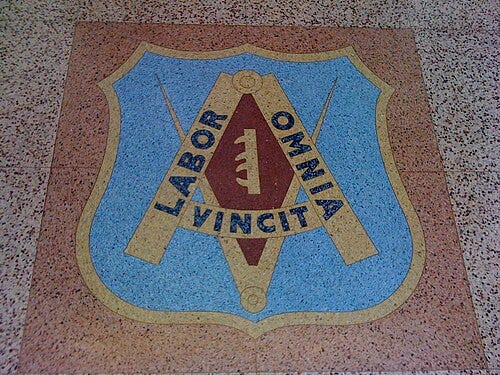
Little unites both teams in our lukewarm civil war like labor—though not the same idea of labor. When Oklahoma chose Labor omnia vincit as its state motto, no doubt the intent was pro-capitalist: Amat victoria curam, as Catullus says, victory loves hard work, spoils follow toils—pull yourself up by your bootstraps! No handouts here! Presumably this is not exactly what the American Federation of Labor or the United Brotherhood of Carpenters meant in selecting the same phrase as their slogan, not to mention the International Union of Operating Engineers or the Brotherhood of Sleeping Car Porters. Fortunately, everyone is wrong, at least when it comes to Virgil’s meaning. Yet the line provides an excellent example of how readily excerption can alter the interpretation of a Virgilian phrase without in the slightest diminishing its force.
The line comes in Book 1 of the Georgics, where Virgil is describing how Jupiter ended the Golden Age by introducing iron, which proved as useful for farming as for war. Virgil opens the passage with the comment that pater ipse colendi / haud facilem esse viam voluit — “Father Jove himself did not / wish that the path of culture should be painless” — and describes at length his various dire innovations, including venomous serpents, prowling wolves, and hurricanes, “all this so want should be / The cause of human ingenuity, / And ingenuity the cause of arts” as David Ferry has it. Arts duly appear—sailing, fowling, fishing, toolmaking, woodsmanship, eventually farming; but before “Ceres first taught mortals to turn the earth with iron,” Virgil says:
labor omnia uicit
improbus et duris urgens in rebus egestas.
It’s no simple matter to translate these words. Here are some versions I have to hand:
What cannot endless Labour urg'd by need? — Dryden
Yes, unremitting labour / And harsh necessity’s hand will master anything. —C. Day Lewis
Hard work prevailed, hard work and pressing poverty. —Peter Fallon
Relentless work conquered / all difficulties—work and urgent need when times were hard. — Janet Lembke
Toil subdued the earth, / Relentless toil, and the prick of dearth in hardship. — Kimberly Johnson
[A]nd everything / Was toil, relentless toil, urged on by need. —David Ferry
As Richard Thomas says in his commentary, “these most crucial lines of the poem have been made to say what they do not, so that the poem may say what it does not” (92). The thing we want them to say, of course, is that all of this struggle is to and for the good, that if we work hard, we will succeed. This sentiment provides a feeling of control, as well as an ethical underpinning for social disparity. Even when we acknowledge that luck plays an outsized role in success and failure, which are never explicable by character merely, and that there are calamities no effort can obviate, we still feel, obscurely, that work is somehow good for us, that we will have our reward, in this world or the next. There is a special providence in things; life is a benevolent taskmaster who never assigns more than we can handle. Isn’t it pretty to think so.
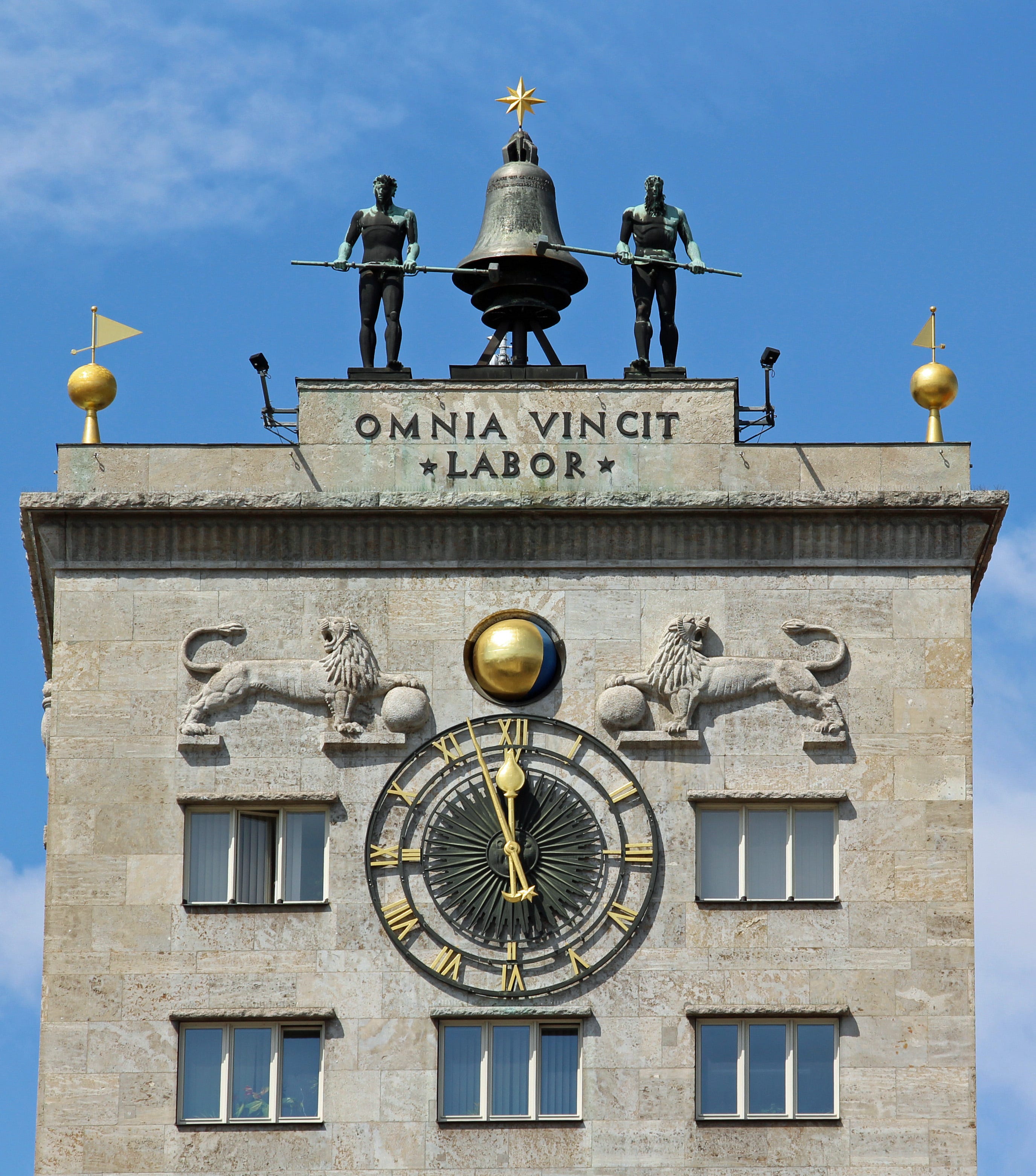
Richard Thomas denies, and I agree with him, that Vergil says any of this, though I do believe Vergil is happy enough to be mis-taken, the way Larkin is with “What will survive of us is love,” or Frost with “And that has made all the difference.” Three points convince me of this. First, the word labor itself, while it does have the base meaning “labor, toil, exertion,” very often in classical poetry has the much more negative sense of "drudgery, hardship, fatigue, distress, trouble, pain, suffering.” Even in the Late Republican period, there was enough overlap in the meaning of labor and dolor that Cicero felt the need to distinguish them (Tusc. 2.15.351). Labor need not always have its most negative sense, but, attached to the adjective improbus, we can’t rule it out. The second point involves improbus (meaning not probus, i.e, dishonest, wicked), which, as Thomas notes, in Vergil is always a negative word, with a range from “rascally” to “unconscionably cruel” to “insatiably savage.” Nowhere does it mean anything like what it would have to—viz. “weariless” or “indefatigable”—to torture optimism from the previous three words. Finally, omnia vicit means, literally, “has conquered all things,” though “conquered” in English does not really suit. It does fit the more cheerful sense which many (like Janet Lembke and Peter Fallon) extract, viz., “has conquered all difficulties,” but this involves an unjustified narrowing of the sense of omnia. As Thomas points out, even in the Georgics there are plenty of difficulties hard work does not overcome, like storms, plague, and Orpheus’s loss. For his part, Thomas translates “insatiable toil occupied all areas of existence,” which is not beautiful but otherwise spot on.
Of the translations above, one must give the palm to Ferry. Fallon, Lembke and Day Lewis are all too partisan (pro-Labo(u)r, as it were), though Day Lewis’s real problem is the use of the future + indefinite (“will master anything”) when “has mastered everything” would set him right. Johnson’s “Toil subdued the earth” is not bad at all at preserving Virgil’s studied ambiguity, though “prick of dearth” is a somewhat dumpy phrase. Dryden’s rendering—“What cannot endless Labour urg’d by need?” is more subtle than it looks, by employing the rhetorical question as a sort of double entendre: on the one hand it is equivalent to stating that there is nothing “endless Labour” cannot do, while on the other it keeps its integrity as a question, as if one might answer, contrariwise, “Actually, quite a lot.” Ferry’s lines are the only ones that strike me as both accurate and idiomatic. The reversal of the word order across the enjambment to “everything / was toil” dispenses with the problem of vicit, while the repetition of “toil” adds heft and pathos. The only thing he doesn’t do is preserve the ambiguity—Ferry’s phrasing, unlike Johnson’s, cannot be misread in the same way as Vergil’s.
Another supremely famous line of Vergil’s which deals with ‘labor’ comes from Aeneid VI. The Sibyl is explaining to Aeneas how it might be possible for him to make it to the underworld and back. In Latin, her speech is beyond impressive. Here it is with Seamus Heaney’s translation:
'sate sanguine divum,
Tros Anchisiade, facilis descensus Averno:
noctes atque dies patet atri ianua Ditis;
sed revocare gradum superasque evadere ad auras,
hoc opus, hic labor est.’“Blood relation
Of gods, Trojan, son of Anchises,
It is easy to descend into Avernus.
Death’s dark door stands open day and night.
But to retrace your steps and get back to upper air,
That is the task, that is the undertaking.”
This is the journey of the hero, the philosopher, the poet, summed up in a single thundering phrase. Everyone can descend into the depths, but to come out again to the light with the riches you found there—not everyone can do that. This passage inscribed itself into the Roman imagination instantaneously and with numinous force, such that it shouldn’t be too hard to conceive the shock of reading, a couple decades later, in the Ars Amatoria:
Hoc opus, hic labor est, primo sine munere iungi;
Ne dederit gratis quae dedit, usque dabit.“Herein lies the task,
The great labour”—to part with nothing before
She’s given herself, so she’ll give more and more
Lest she lose what she’s given already. [Trans. Michie]
For Ovid, the “great task” has become figuring out how to get laid without first plying the lady with gifts. While quite funny in context, it’s tempting to say that this scrap of literary sacrilege alone could have justified his exile in Augustus’ eyes; at the moment, I’m not too inclined to disagree! Though it was in exile, surrounded by Latinless barbarians, hopelessly spinning verses for a public at home whose applause he would never hear again, that Ovid made his truest statements about the relationship between the work of poetry and that of life:
from Tristia 5.7
Nec tamen, ut lauder, uigilo curamque futuri
nominis, utilius quod latuisset, ago.
Detineo studiis animum falloque dolores,
experior curis et dare uerba meis.
Quid potius faciam desertis solus in oris,
quamue malis aliam quaerere coner opem?
Siue locum specto, locus est inamabilis, et quo
esse nihil toto tristius orbe potest,
siue homines, uix sunt homines hoc nomine digni,
quamque lupi, saeuae plus feritatis habent.
Non metuunt leges, sed cedit uiribus aequum,
uictaque pugnaci iura sub ense iacent.
Pellibus et laxis arcent mala frigora bracis,
oraque sunt longis horrida tecta comis.
In paucis remanent Graecae uestigia linguae,
haec quoque iam Getico barbara facta sono.
unus in hoc nemo est populo, qui forte Latine
quaelibet e medio reddere uerba queat.
Ille ego Romanus uates (ignoscite, Musae)
Sarmatico cogor plurima more loqui.
En pudet et fateor, iam desuetudine longa
uix subeunt ipsi uerba Latina mihi.
Nec dubito quin sint et in hoc non pauca libello
barbara: non hominis culpa, sed ista loci.
Ne tamen Ausoniae perdam commercia linguae,
et fiat patrio uox mea muta sono,
ipse loquor mecum desuetaque uerba retracto,
et studii repeto signa sinistra mei.
Sic animum tempusque traho, sic meque reduco
a contemplatu summoueoque mali.
Carminibus quaero miserarum obliuia rerum:
praemia si studio consequar ista, sat est.I do not toil for praise, or to ensure
life to a name far better off obscure;
the work distracts my mind, cheats misery,
and tries, with words, to con calamity. 40
What else to do, alone in this wilderness?
What other balm should I seek in distress?
I look around; it’s not a pleasant place:
no landscape ever wore a sadder face.
I see the men, if they can be so styled:
compared with wolves, they’re more grotesque and wild.
They scoff at justice; strength, not law, is lord,
and rights submit to the aggressor’s sword.
They fight the cold with baggy pants and skins,
and matted bristles shield their heads and chins. 50
In a few, vestiges of Greek are found,
though made barbaric by a Getish sound.
In all these tribes there’s no one who could summon
a single Latin word, however common.
So I, the Roman bard—Muse, don’t harangue!—
must often speak with a Sarmatian twang.
I blush to say so—in this long neglect
I grope for Latin words, and can’t connect.
I’m sure that in these pages there’s a mix
of barbarisms—don’t blame me, blame the sticks. 60
Fearing to lose my old Italian speech,
my homeland muted in me, out of reach,
I mutter to myself, and, out of dumb
desuetude forcing the words to come,
rehearse my catastrophic idiom.
That’s how I use my mind and time, and strain
to draw my thoughts from the pursuit of pain.
If poems help me forget a while my crisis,
if that’s the prize my toil wins, it suffices.
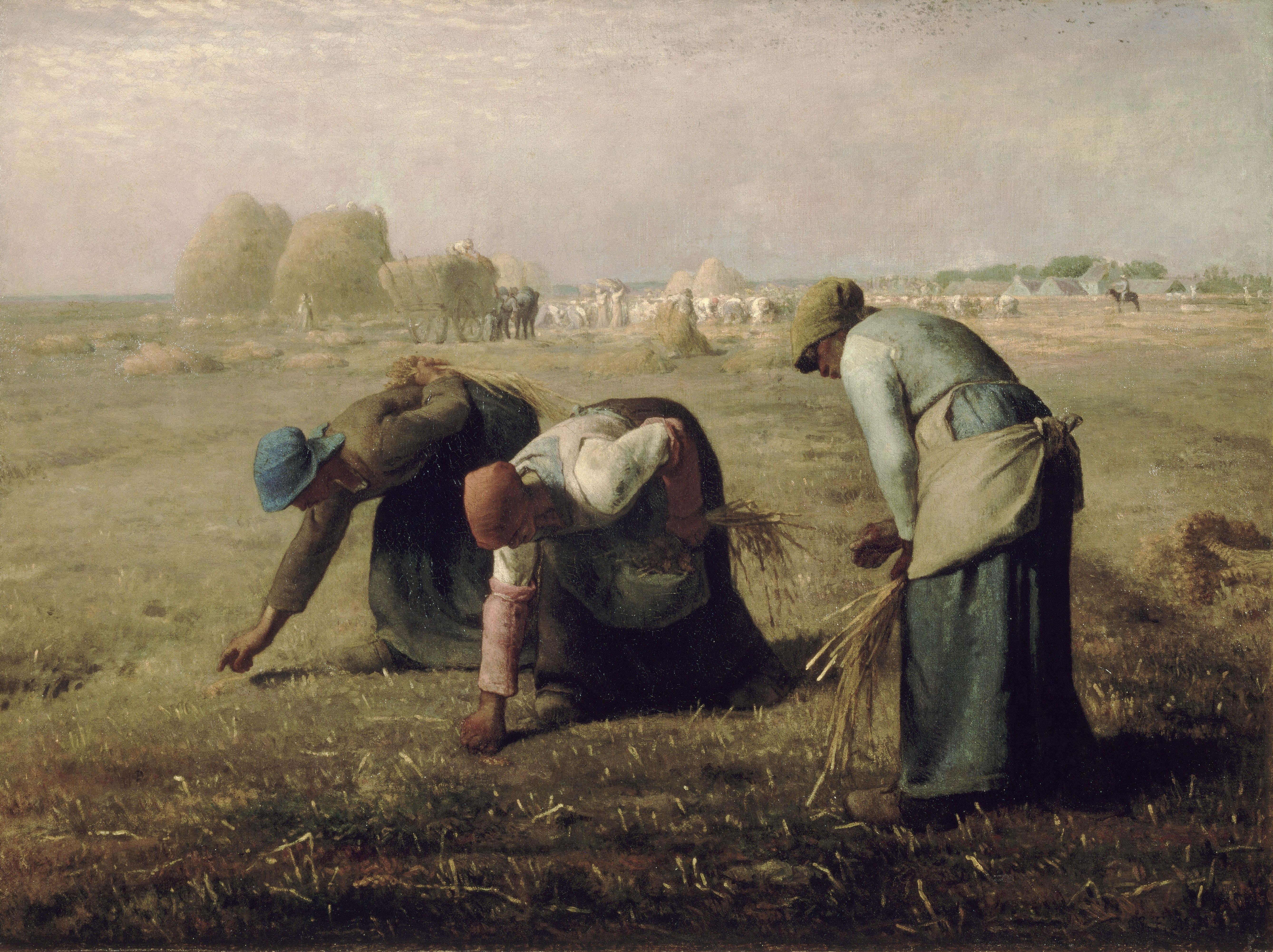
Cic. Tusc. 2.15.35: interest aliquid inter laborem et dolorem. Sunt finitima omnino, sed tamen differunt aliquid. Labor est functio quaedam vel animi vel corporis gravioris operis et muneris, dolor autem motus asper in corpore, alienus a sensibus.
There is some difference between toil and pain; they are certainly closely related, but there is a difference: toil is a mental or physical execution of work or duty of more than usual severity; pain on the other hand is disagreeable movement in the body, repugnant to the feelings. [Trans. J.E. King]
I admire your ability to do holiday appropriate bilingual posts with audio! This is great. As usual.
From Labor Day to Virgil to Oklahoma, from the carpenters to Ovid - what a splendid tour d’horizon.